 yesarticle.com Free Articles and Guide
Hey there! So, let’s dive into a condition that doesn’t get as much attention as it deserves—Diabetes Insipidus (DI). It sounds a lot like diabetes mellitus (the one with blood sugar issues), but trust me; it’s a whole different ball game!
What is Diabetes Insipidus?
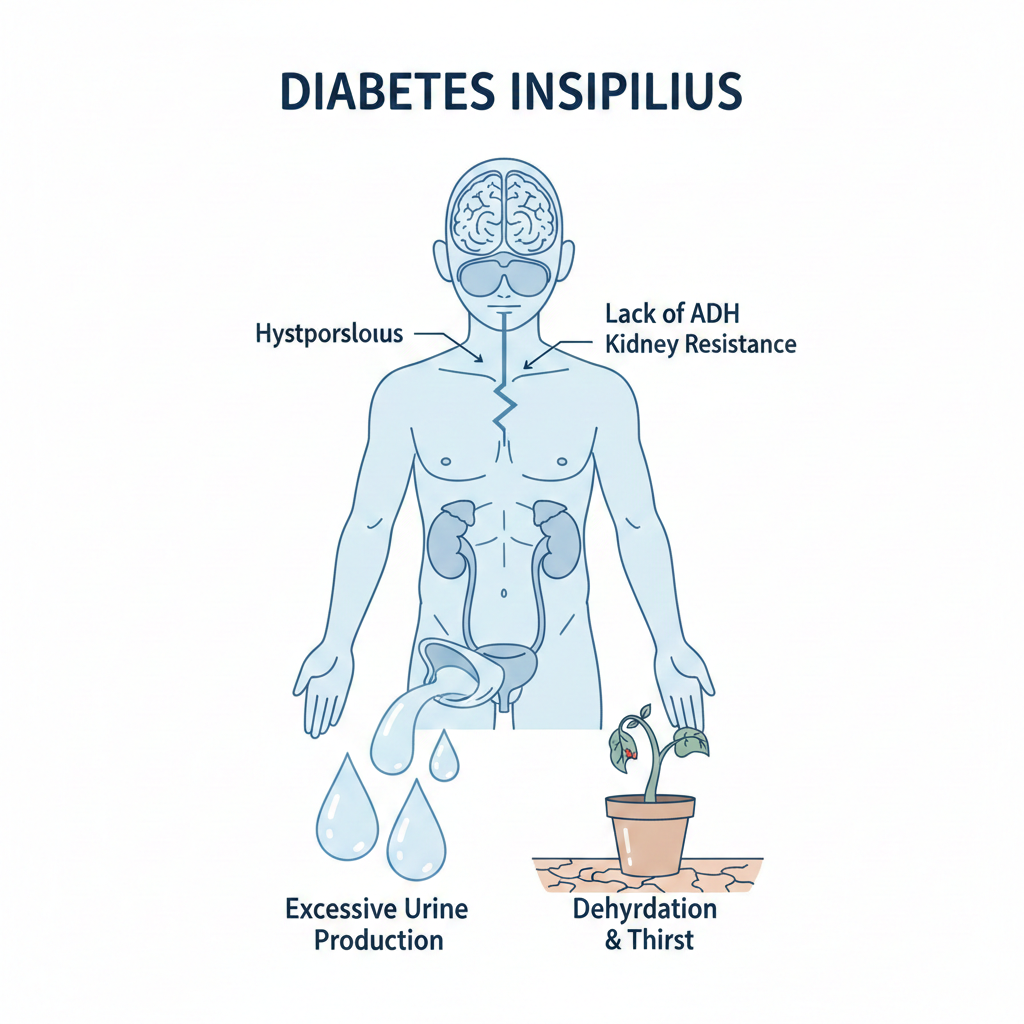
Diabetes Insipidus is a rare disorder that primarily affects how your body manages fluid. It occurs when your kidneys don’t respond properly to a hormone called antidiuretic hormone (ADH). This hormone tells your kidneys to retain water. So, if you’ve got DI, your kidneys are basically misinterpreting the memo and deciding to flush out all that precious H2O.
Types of Diabetes Insipidus
There are two main types of DI:
-
- Cranial DI: This is when your body doesn’t produce enough ADH, often due to damage to the pituitary gland. This can happen from head injuries, surgeries, or even genetic factors.
-
- Nephrogenic DI: In this case, your kidneys are just not responding to ADH, usually due to genetic issues or chronic conditions like kidney disease.
Symptoms to Watch For
Symptoms of DI can be pretty noticeable:
-
- Excessive thirst (polydipsia)
-
- Frequent urination (polyuria)
-
- Possible dehydration and its effects, like dry skin or headaches
Ever felt like you’re sipping on water the entire day? That could be a red flag!
Diagnosis: What’s the Drill?
The diagnosis process usually involves a variety of tests. First up, your doc may perform a water deprivation test. Essentially, they’ll monitor how well your body concentrates urine after a period without drinking any fluids. They may also check your blood and urine tests to measure hormone levels and kidney function.
Management Strategies to Keep You Hydrated
Now, let’s talk about how to manage this condition. Thankfully, there are a few routes you can take:
-
- Medications: In some cases, a synthetic form of ADH called Desmopressin can help the body retain water. It’s typically taken through nasal spray or pills.
-
- Diet and Hydration: Staying well-hydrated is a big deal! Make sure you’re drinking enough water throughout the day. You might want to avoid diuretics (think coffee and alcohol) that can worsen the condition.
-
- Monitoring: Regular check-ups with your healthcare provider can help keep your symptoms in check. Keeping an eye on kidney function is essential!
When to Seek Help
If you’re experiencing excessive thirst or frequent urination, it’s time to hit up your healthcare provider. Early diagnosis and management can make a world of difference!
Wrapping It Up
So there you have it—a friendly breakdown of Diabetes Insipidus! While it might not be as well-known as other diabetes types, it’s important to recognize and understand it. If you suspect you have DI or have any related symptoms, don’t hesitate to reach out to a medical professional. After all, staying hydrated is key to living your best life!
For more info and resources, you can always explore reputable health websites, or better yet, have a chat with your doctor. Until next time, stay healthy and hydrated!